Water in the Desert: A Free Visit to Clark County Wetlands Park
By Eli MarlowePublished Updated 2 min read
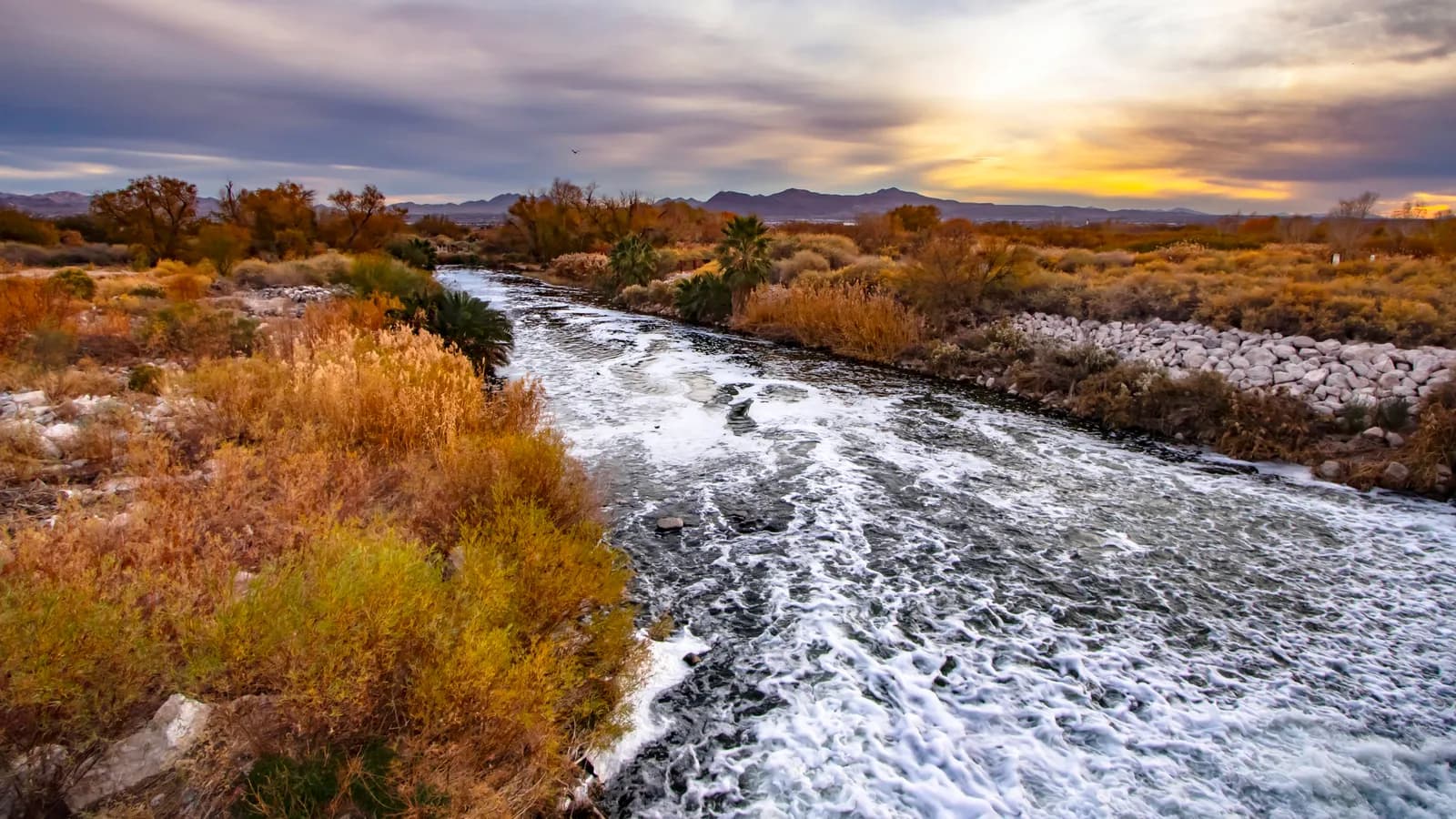
The Las Vegas Wash carries water east toward Lake Mead, through a landscape of reeds, ponds and cottonwood trees. At Clark County Wetlands Park, that water supports a place where you can spend a morning following a pond's edge or watching for birds. Admission is free.
The park covers 2,900 acres on the eastern edge of the valley, but a first visit can stay within its 210-acre Nature Preserve and adjoining Nature Center. Start with those two places and let the larger trail system wait for another day.
Follow the water's story
The Wash was once fed by intermittent flows. From the 1950s, treated water discharged by the valley's wastewater facilities helped turn it into a year-round stream. Today, reclaimed water joins groundwater, stormwater and urban runoff on its way downstream. That history explains why a green corridor has developed here in the Mojave Desert.
Along the water, reeds and other wetland plants provide cover and help filter the flow. Farther away, mesquite woodland and desert scrub change the character of the landscape. Watching those transitions gives a walk something to follow even when wildlife stays out of sight. County natural-resources guide
Choose a few places to pause
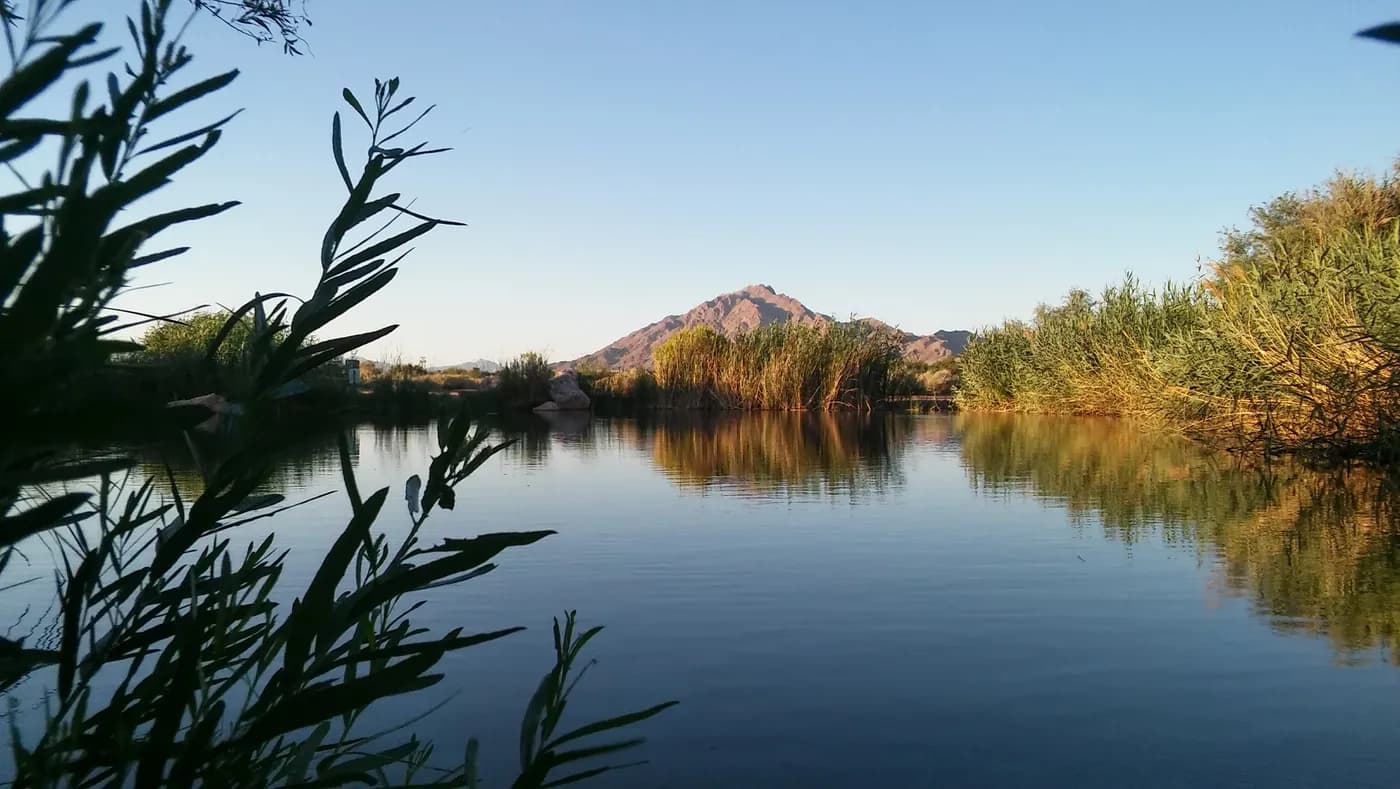
Within the Nature Preserve, paved paths pass through cottonwood groves and mesquite woodland, with unpaved trails extending the choices. Boardwalk Pond is one place to look for turtles and water birds. The North Pond wildlife blind offers another place to pause, with the possibility of seeing herons or egrets.
Give one pond a little time. Looking across its whole surface, then along the margins, can turn a stop into a closer look at how the habitat is used. The county identifies American coots by their dark bodies and white bills; their movement on the water can be easier to pick out than a heron standing among the reeds.
The Upper Diversion Weir Bridge, also called the Big Bridge, spans the Wash. From here, the river itself becomes the subject. The weirs along its course slow the flow and help limit erosion. Nature Preserve guide
Include the Nature Center
The Nature Center's Exhibit Gallery uses interactive displays and dioramas to explain the park's habitats, wildlife and history. It is a useful first stop if you want help interpreting the landscape, or a place to spend more time after being out on the paths.
For a lunch break, the Lizard Lounge offers indoor picnic space with views over the preserve. Visitors may bring their own food; this is the designated picnic area within the Nature Preserve. Nature Center information
Plan a separate outing from the Strip
The Nature Center is at 7050 Wetlands Park Lane. Park trails are normally open dawn to dusk daily; the Nature Center's regular hours are Tuesday–Sunday, 9 a.m.–3 p.m. Going during the center's opening hours lets you combine the outdoor and indoor parts of the visit. Transport is separate from free park admission.
As of November 26, 2026, pond maintenance is scheduled through February 2027, with temporary trail closures; a separate construction project affects the western side of the preserve.
Check the county's current notices and maps before setting out to choose open paths and confirm Nature Center access. More free outings are listed in our Las Vegas guide.
Places in this guide
- Free trails and nature center at Clark County Wetlands Park
Daily · Clark County Wetlands Park
https://freebles.app/las-vegas/guides/wetlands-park-water-in-the-desert